You spent $150,000 on your freedom machine. Don't let a $100 policy mistake turn it into the world's most expensive lawn ornament.
That Sinking Feeling
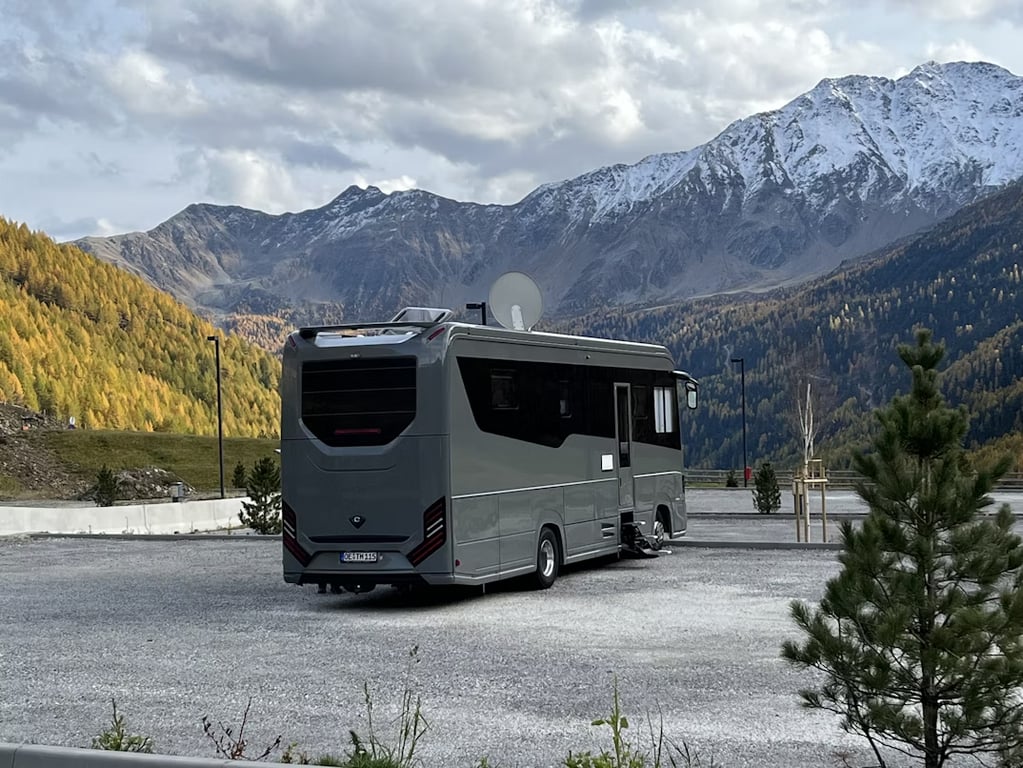
You know the smell. It’s that perfect mix of diesel, pine trees, and coffee from the dinette. You just backed your 40-foot Class A "beast" into the perfect spot. The slides are out, the awning is unfurled, and the only thing on the agenda is a cold drink and a campfire. This is it. This is the freedom you paid for.
Then, you hear it. A snap, a crack, and a yell.
A neighbor’s kid, racing his bike too fast around the loop, didn't see your newly extended slide-out. He’s fine, thankfully, but your slide mechanism is mangled. You shrug it off. "That's what insurance is for, right?"
Wrong.
You call your auto insurance—the one you just added your RV to—and get a chilly response: "I'm sorry, sir, but your policy only covers liability and collision while in motion. We don’t cover damage to the 'living quarters' or accidents that happen while the vehicle is parked as a residence."
That sinking feeling? That’s the realization that you’re on the hook for a $20,000 repair. Your ultimate freedom machine just became a very expensive, very broken box.
Here at Yeah! Motor, we’re all about the horsepower, the lifestyle, and the sheer awesomeness of these massive machines. We celebrate the engineering and the thrill of the open road. But that thrill dies fast when you discover the gaps in your insurance are big enough to drive your rig right through. This isn't a boring paperwork guide. This is the gearhead’s guide to not getting financially wrecked by the fine print.
Mistake #1: "I'll Just Add It to My Auto Policy."
This is, without a doubt, the most common and most costly mistake new RV owners make. We get it; it’s easy. But your auto policy is designed for a car, not a house on wheels.
Relying on a standard auto policy alone can leave you financially vulnerable. Why? Because that policy typically ends its serious coverage the second you put it in "Park."
What Your Auto Policy Thinks an RV Is: A big van. It’ll cover you (maybe) if you rear-end someone on the highway.
What Your RV Actually Is: A complex machine with awnings, slide-outs, leveling jacks, refrigerators, water heaters, and generators.
A dedicated RV policy is a hybrid, mixing auto insurance with homeowner's insurance. It provides specialized coverage that your auto policy won't touch, like protection for your onboard appliances, awnings, and the living quarters themselves. If a freak hailstorm shreds your $3,000 awning or a power surge at a sketchy campground fries your electronics, your auto policy will just send you a "thoughts and prayers" email. A real RV policy sends you a check.
Mistake #2: The "Full-Timer" vs. "Part-Timer" Trap
"So, you sold the house to live the dream? Awesome. Did you tell your insurance company?"
If the answer is no, you might not have any insurance at all.
There are two completely different worlds in RV insurance, and crossing from one to the other without updating your policy is catastrophic.
Recreational / Part-Timer Policy: This is for the weekend warrior or the summer vacationer. The insurance company knows you have a "sticks-and-bricks" home somewhere else. These policies are cheaper, often running between $300 to $800 annually for a part-timer.
Full-Timer's Policy: This is for those who use the RV as their permanent residence. This policy functions like a homeowner's policy. It costs more—typically $1,500 to $4,000 per year—because it includes two critical things:
Personal Liability: This isn't about driving. This is "someone slips on your RV steps, breaks their leg, and sues you for $200,000" liability. Your auto policy liability won't cover this. A full-timer policy will.
Higher Personal Effects: We'll get to this next, but a full-timer policy knows you have your entire life in that rig, not just a weekend bag.
If you are a full-timer on a recreational policy, your insurer can—and likely will—deny your claim entirely when they find out you’ve been living in it.
Mistake #3: Assuming Your "Stuff" is Covered
Take a quick inventory. That laptop on the dinette? $1,500. The two high-end e-bikes on the back? $4,000. That professional-grade grill in the bay? $1,000. The tools, the clothes, the kitchen gear... it adds up.
Many RV owners carry expensive electronics and outdoor gear. A standard recreational policy might only include $5,000 of "Personal Effects" coverage. Some policies don't cover personal items at all, only the vehicle itself.
A thief can clean you out in 10 minutes. According to FBI data, RV thefts (of the vehicle or its contents) result in nearly $50 million in insurance claims every year.
You need to check your policy declarations page right now. If your "Personal Effects" limit is a laughable $2,000, you need to call your agent. Full-timers often need to get coverage bumped up to $20,000, $50,000, or even more to actually protect their belongings. Don't assume your home policy will cover it, either—many have "off-premises" limits.
Mistake #4: Skimping on "Vacation Liability"
This one sounds optional, but it’s the add-on that can save your financial life. It's cheap, too—often just $30 to $75 a year.
So what is it?
Vacation Liability (sometimes called "Campsite Liability") protects you when your RV is parked and you're using it as a temporary residence. Remember that kid who hit your slide-out? What if he had been seriously hurt? Or what if your campfire escapes its ring and damages the rig next to you? Or your dog bites a passing hiker?
Your auto liability does not cover this. That coverage is for when you are driving. Vacation Liability pays for bodily injury or property damage to others that happens in or near your parked RV while you're on vacation. It’s the $50 add-on that prevents a $500,000 lawsuit from ending your vacation and your retirement.
Mistake #5: The "Actual Cash Value" Gut-Punch
Your beautiful, brand-new $200,000 Class A gets T-boned by someone running a red light. It's totaled. A devastating loss, but you're insured.
Then the claims adjuster calls. "Okay, so your 2024 model is now a year old, and it has 15,000 miles on it. After depreciation, the 'Actual Cash Value' (ACV) is $145,000."
Wait, what? But a new one costs $210,000! How are you supposed to replace your rig?
You can't. You just lost $65,000 to depreciation.
This is the brutal difference between two policy types:
Actual Cash Value (ACV): Pays you what your RV is worth at the moment of the crash.
Total Loss Replacement (TLR): Pays to replace your totaled RV with a brand new, similar model.
TLR is an optional coverage you must add, especially for an RV that's five years old or newer. Yes, it costs more. But it's the only thing that truly protects your massive investment from being wiped out by a single bad day.
Mistake #6: "I Have Roadside Assistance" (No, You Don't)
You're cruising through a remote stretch of Nevada when... BANG. A blowout on a rear dually. You pull your 38-foot, 26,000-lb motorhome to the shoulder and call your auto club.
You know what they're going to tell you? "Sorry, sir, your plan covers towing up to 10 miles for a passenger vehicle. We don't have anyone who can handle a heavy-duty vehicle chassis or a 22.5-inch tire."
You are stranded.
Standard roadside assistance is useless for most RVs. You need a specialized RV roadside plan. These plans are built to handle the big stuff:
Towing a 30,000-lb rig to a shop that can actually service it (not just the nearest 10-mile-limit garage).
On-site mobile tire service for heavy-duty truck/RV tires.
Lockout service for RV-specific doors and locks.
Trip Interruption: This is a huge one. If you break down far from home, this coverage helps pay for hotel stays, food, and alternate transportation while your rig is in the shop.
A pay-per-use tow for a Class A can start at $154 just to hook up and can easily run into the thousands. Don't get stranded. Get the right roadside plan.
Protect Your Passion
Your motorhome isn't just a vehicle. It’s a statement. It’s an engineering marvel. It's the key to a lifestyle of pure freedom.
We, as motor lovers, spend countless hours obsessing over engine specs, floor plans, and tow capacity. We’ll argue for hours about diesel pushers vs. gas V10s. We need to bring that same gearhead passion to protecting the machines we love.
Don't let your dream be derailed by fine print. Open your policy. Read the declarations page. Ask your agent the hard questions: "Am I covered for Total Loss Replacement?" "What's my Personal Effects limit?" "Do I have Vacation Liability?" "Are you sure my auto policy add-on is enough?" (Hint: It's not).
Your rig is pure automotive awesomeness. Insure it that way.