You’re not in the showroom. You’re not smelling the new, outgassing plastic or being blinded by the polished chrome under 1,000-watt lights.
You’re on Craigslist, Facebook Marketplace, or maybe even parked on a curb, looking at a machine that’s already lived a little. It’s got a few scuffs on the side, the tires aren't brand new, and the odometer already has four digits.
This isn't a simple purchase. This is a hunt. And you're here because you know the secret: buying a used scooter is for the smart rider. Here at Yeah! Motor, we love anything with an engine , but we have a special respect for the gearhead who knows the value of a dollar. We live and breathe this stuff . Why let someone else charge you a grand for "depreciation" when you can find a diamond in the rough and be on the road for under $1,000?
But this hunt has traps. A cheap scooter can become a very expensive paperweight if you don't know what you're doing. So, grab a flashlight. We’re going in.
1. The "Smart Money" Gospel: Why Used is King
Let's get the obvious, glorious, number-one reason out of the way: the price.
A new scooter takes a massive financial hit the second it leaves the showroom. That $4,000 new Honda PCX is a $2,200 scooter in 24 months. That's a 45% drop. When you buy used, you’re letting some other person pay for that depreciation. You’re stepping into the "sweet spot" of the value curve.
But the benefits don't stop there:
"Free" Upgrades: The first owner is the one who bought the $150 rear cargo box, the $80 windscreen, or the $50 phone mount. You get all those "extra accessories" for a fraction of the cost, if not for free.
No "Kinks": The first 600-mile service is done. This is the most important (and often expensive) service of the bike's life. Any weird factory "kinks" or recalls have already been sorted out by the first owner, on their dime.
The "Scuff-and-Go" Mentality: A new bike is a precious object. You're terrified of that first scratch. A used scooter? It's probably already got a few "character marks". This is liberating. You can park it, use it for the grocery run, and not have a panic attack every time you zip through a tight spot. It’s a tool, not a jewel, and you'll use it more because of that.
The Community: Buying a used scooter isn't just a transaction; it's an initiation. That $1,500 used Honda Ruckus? You didn't just buy a bike; you bought a ticket to a massive global modding scene. That used Vespa? You're now part of a club with 70 years of history.
2. The Risk: You Are The Warranty
Okay, let's put the cold rag on. Buying used isn’t all sunshine and savings. When you buy from a private seller, the second you hand over the cash, that scooter is 100% your problem. There is no warranty.
That $800 "steal" isn't a steal if you have to drop $400 on a new battery, tires, and a new ignition switch a week later. You are buying the previous owner's maintenance habits (or lack thereof). You're buying the "DPO" (Dreaded Previous Owner).
This is the guy who:
Thought 10W-40 car oil was "fine" for a CVT transmission.
Never changed the oil. Ever.
Dropped it, cracked the fairing, and "fixed" it with zip-ties and duct tape.
Let it sit outside, uncovered, for three winters.
You have to be your own mechanic, or at least your own inspector . And you must know what you're looking for, or you'll get burned.
The "No-Name" Nightmare
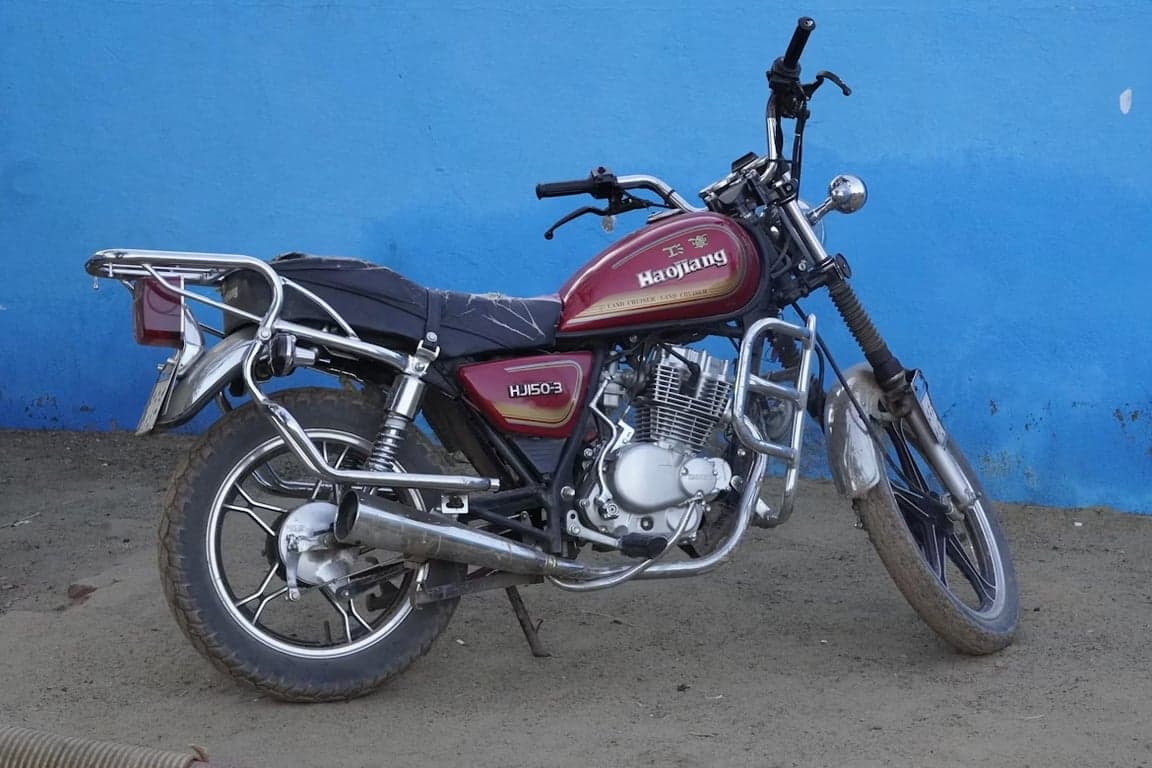
This is the single biggest trap on the used market. You'll see it: a 4-year-old "BMS," "TaoTao," or some other brand you've never heard of for $400. You'll think, "How bad can it be?"
Here's how bad:
The Parts Don't Exist: The company that imported it is gone. The "factory" that made it built 40 different versions that look the same but have different parts. The ignition you need? It's not available.
No One Will Fix It: No reputable mechanic will touch it. They know they can't get parts and they don't want the liability.
It's Dangerous: The "metal" is soft, the bolts strip if you look at them wrong, and the brakes are a suggestion, not a command.
That $400 "deal" will become a $0 brick in your backyard the first time it needs a real repair.
3. The "Yeah! Motor" Inspection Checklist (The Battle Plan)
Print this. Memorize it. Do not be shy. You're there to inspect a machine, not make a friend. Bring a flashlight (even in the daytime) and a paper towel.
Phase 1: The Paperwork (The Pass/Fail Test)
Before you even kick a tire, ask for the Title (or 'pink slip') and the seller's ID.
Do they match? If the name on the ID isn't on the title, you're not talking to the owner. This is a massive red flag. Walk away.
What does the title say? Look for words like "Salvage," "Rebuilt," or "Flood." If it’s anything but "Clean," you are buying a
bike that has been totaled by an insurance company. Walk away.
Phase 2: The Walk-Around (Before it Starts)
Body: Scratches are fine. Cracks are bad. Are the plastic panels aligned? Big gaps or misaligned panels = a crash.
Tires: Don't just look at the tread. Look at the sidewalls for cracks (dry rot). Find the Date Code (a 4-digit number like "3220"). This means the 32nd week of 2020. If the tires are more than 5-6 years old, they are hard as a hockey puck and unsafe, even with tread. Budget $200-$300 for a new set.
Brakes: Pull the brake levers. Do they feel firm, or do they feel "mushy" and go all the way to the handlebar? Look at the brake fluid reservoir. Is the fluid clear/light yellow, or is it dark brown/black? (Dark = old and needs flushing). Look at the brake pads—is there any "meat" left on them?
Suspension: Push down hard on the handlebars. Do the forks compress smoothly and return? Or do they "pogo" stick? Look at the fork seals—do you see any oily residue? (Leaking seals = a $200+ repair).
Frame: Look under the bike with your flashlight. Do you see rust on the frame, especially on the welds?
Phase 3: The Cold Start (The Most Important Test)
Touch the engine. Put your hand on the metal. Is it cold? Good. If it's warm, the seller started it before you got there to hide a starting problem.
Watch it start. Does it fire right up? Or does it crank... and crank... and crank?
Listen. You're listening for a smooth, steady idle. You are not listening for rattles, clunks, or a high-pitched "tick-tick-tick". Bad sounds are expensive.
Phase 4: Fluids & Electrics
Oil: Pull the dipstick. Wipe it with your paper towel. Is the oil golden or dark? (Dark is fine). Is it milky/chocolatey? (Bad! Water/coolant is in the oil). Is it gritty? (Worse! Metal bits).
Electrics: Test. Every. Single. Thing.
Headlight (high and low beam)
Brake lights (check both the front and rear brake levers)
Turn signals (front and back)
Horn
Does the dash light up? Is the speedometer working?
Phase 5: The Test Ride
No test ride? No sale. Never, ever buy a bike you haven't ridden.
Head Bearing Check: Stand next to the bike. Hold the front brake. Rock the bike hard back and forth. Do you feel a "clunk" in the handlebars? That's a bad head bearing.
How does it feel? Does it accelerate smoothly, or does it "lurch" or "slip"? (CVT problems).
Test the brakes. Get going to 15-20 mph and give them a firm squeeze. Does it stop straight? Does the handlebar shudder? (Warped rotor).
Does it track straight? On a safe, flat road, briefly ease your grip. Does it pull to one side? (Could be a bent frame).
4. The "Sweet Spot": What to Hunt For
You're armed with the checklist. Now, what's the "prey"?
Tier 1: The Japanese Titans (The "Buy-it-for-Life" Choice):
Honda PCX 125/150: The undisputed king of modern, reliable, fuel-injected commuting.
Yamaha Zuma/NMAX/C3: The Zuma is the rugged, tough-as-nails choice. The NMAX is the sporty PCX competitor. The C3 is the quirky, cargo-carrying box.
Suzuki Burgman: A legend. The 200, 400, or 650 are all fantastic "maxi-scooters" built for comfort and speed.
Tier 2: The European Icons (The "Style-Tax" Choice):
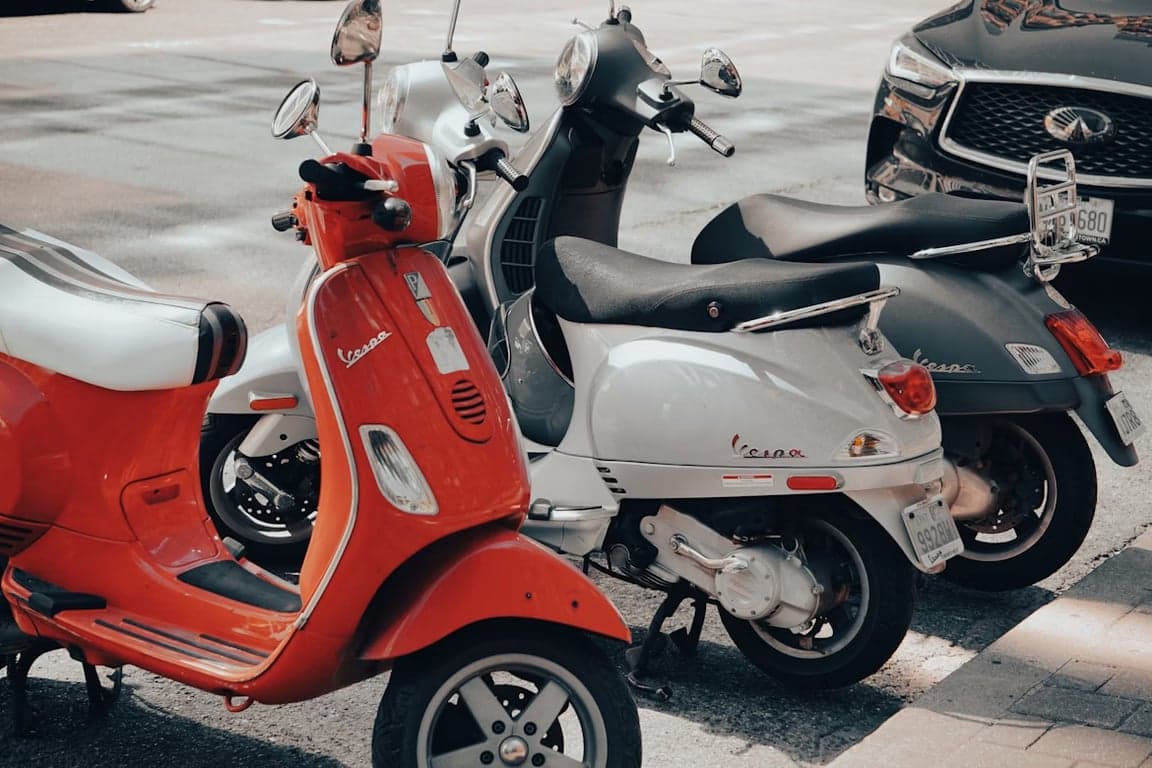
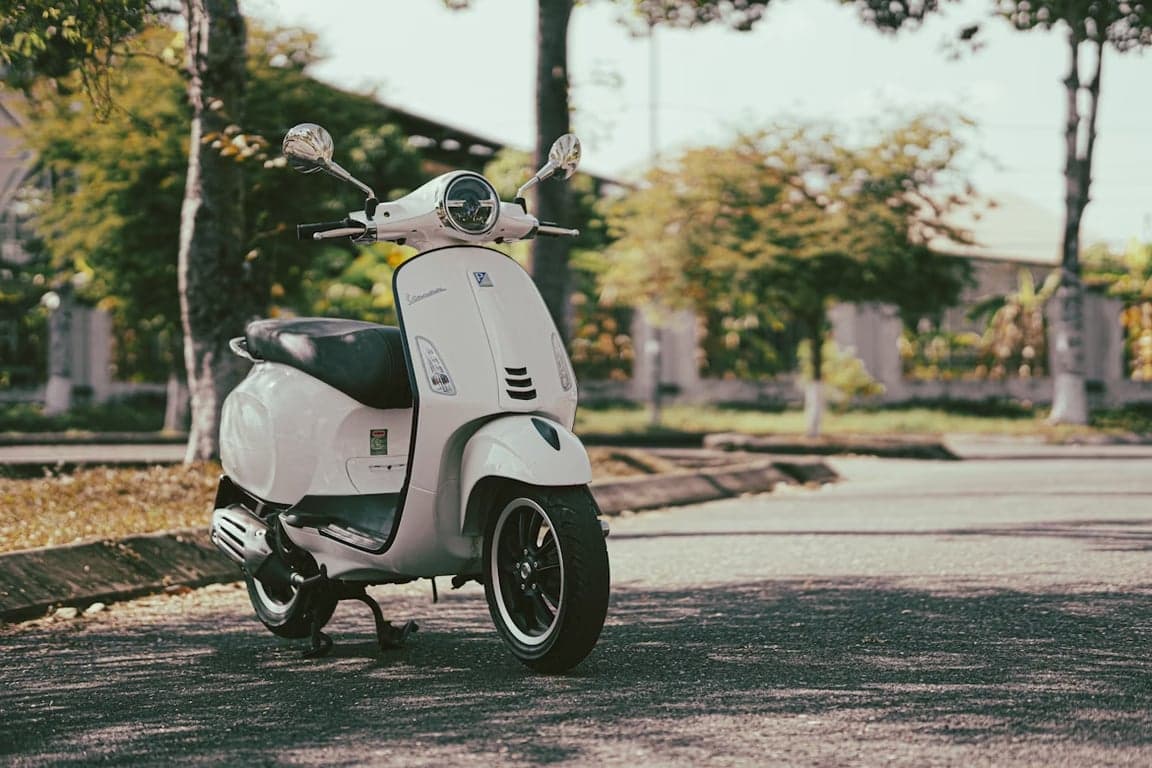
Vespa/Piaggio: You're paying a "style tax," but it's worth it. A Vespa GTS or Piaggio Liberty has a metal body, holds its value like a champ, and has a massive enthusiast community.
Tier 3: The Taiwanese Value Kings (The "Smart-Money" Choice):
Kymco & SYM: This is the real "inside baseball" move. Brands like Kymco (Like 150i, People) and SYM (Fiddle) build fantastic, reliable machines that are 9/10ths of the Japanese quality for a fraction of the price.
Tier 4: The Cult Classic (The "Modder's Choice"):
Honda Ruckus: It's slow, it's uncomfortable, and it has no storage. It's also one of the most fun bikes on the planet. The modding community is endless.
The Final Roar: The Conquest
Buying new is a simple transaction. Buying used is a conquest .
You are testing your knowledge, your gut, and your negotiating skills. The feeling of riding home on a machine you know is solid—and that you stole for 50 cents on the dollar—is one of the best feelings in the motor world.
You didn't just buy it. You earned it. Now go start the hunt.