You’re scrolling. Again.
Marketplace. Craigslist. Cycle Trader. Your thumbs are sore, and your eyes are blurry from staring at endless pictures of chrome and steel. You’re not looking at the shiny, sterile showrooms. You’re not interested in a zero-mile odometer and a 5-year loan agreement.
You’re on the hunt.
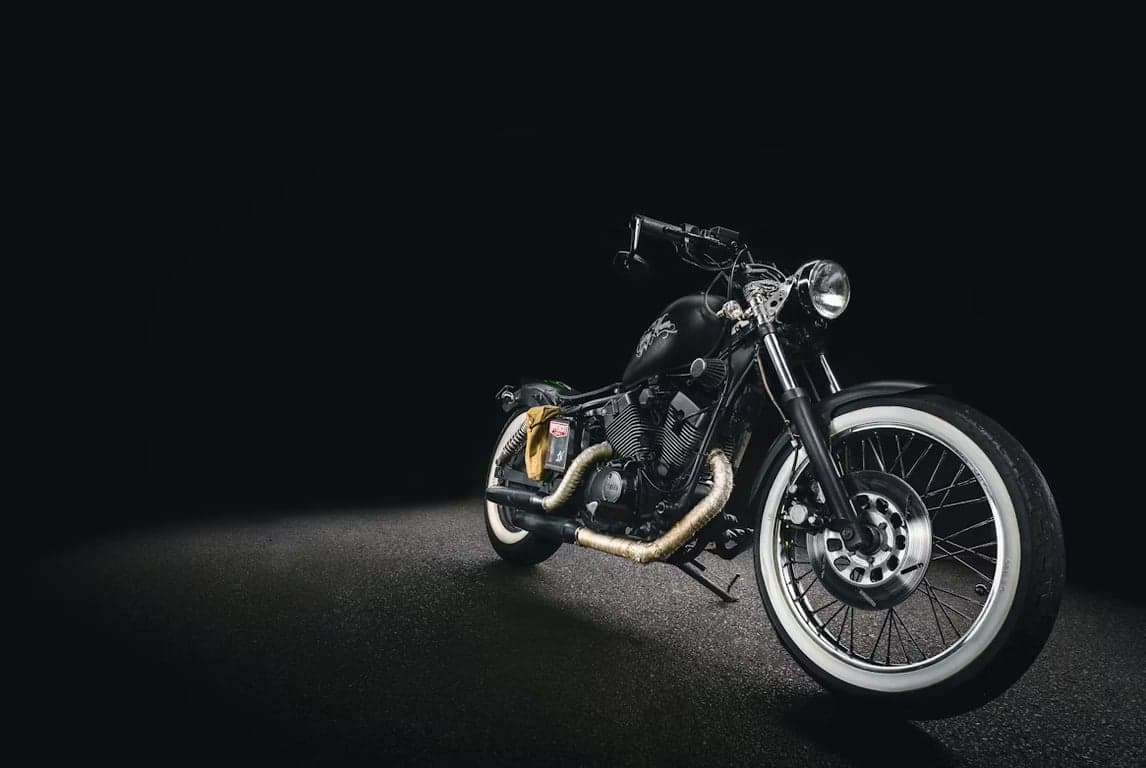
 You’re looking for character. You’re looking for a machine that’s already earned its stripes, a bike with a soul that’s already been broken in . You’re in the market for a used cruiser, and that, my friend, is where the real adventure begins.
Here at Yeah! Motor, we get it. We live and breathe machines that move , and we’ve spent more hours under the hood—and in the saddle—than we can count . Buying new is a simple transaction. Buying used? That’s a conquest. It’s a test of your knowledge, your gut, and your passion.
The reward? A machine that’s 100% yours, for a fraction of the price, with a story to tell before you’ve even turned the key. So let’s get our hands dirty and dive into the ultimate gearhead’s guide to buying a used cruiser.
1. The "Why Used?" Gospel: More Bike, Less Money
Let's get the obvious, wonderful, beautiful reason out of the way first: the money.
The Depreciation Monster is Your Best Friend
A new motorcycle is a lot like a new car. The second it rolls off the showroom floor, its value plummets. It’s called depreciation, and it’s a financial sledgehammer.
Year 1: A brand-new bike can lose 15% to 20% of its value in the first 12 months.
Year 3-4: By the time the bike is 3-4 years old, it could be worth 30% to 40% less than its original sticker price.
When you buy new, you are the one paying for that drop. When you buy used, you’re profiting from it. You are letting someone else take that massive financial hit. You’re stepping in at the "sweet spot" where the bike has finished its steepest value drop and will depreciate much, much slower.
That $20,000 Road King? You can find a pristine 3-year-old model for $13,000. That $12,000 Indian Scout? Look for a 2-year-old one for $8,500. You are getting more bike for your buck, plain and simple.
"Free" Upgrades and Cheaper Insurance
Here’s another win. The first thing everyone does to a new cruiser is modify it.
Exhaust (Stage 1): $800 - $1,500
Air Cleaner (Stage 1): $200 - $500
ECU Tune (Stage 1): $200 - $400
New Seat: $300 - $600
On the new market, that’s all on your dime. On the used market, you can find a bike where the DPO (Dreaded Previous Owner) has already done all the work—and you get it all for free. Finding a bike with a quality Stage 1 setup already installed is a massive win that saves you thousands.
Oh, and that monthly cost? Your insurance payment will be significantly lower on a $9,000 used bike than on a $20,000 new one. That’s cash that stays in your pocket, where it belongs.
2. The Soul Factor: Character is Earned, Not Bought
A new bike has no stories . A used bike has a past. It’s got a few tiny rock chips on the front fender from a road trip. It’s got that perfect exhaust note from a set of pipes that are already blued just right. It has soul.
You’re not just buying a mode of transport; you’re adopting a machine .
This is also your ticket to history. Buying used doesn't mean "a few years old." It means you can get any cruiser from any era.
Want a classic '90s Harley-Davidson Evo-era Sportster?
Looking for an "unkillable" 2005 Honda Shadow?
Dreaming of a early 2000s "torque monster" like the Suzuki M109R or Yamaha Warrior?
The used market is your time machine. You have access to decades of engineering, style, and legendary models that are no longer in production. You aren't limited to what's in the 2025 catalog; you have the entire library.
3. The Risk: The "As-Is" Gamble
Okay, let's put the cold rag on. It’s not all sunshine and free exhaust pipes. When you buy used (especially from a private seller), there is no warranty. The second you hand over the cash and that title is signed, that machine is 100% your problem.
This is the trade-off. The thousands you save in depreciation, you are "betting" on the bike's mechanical health.
This is where the DPO (Dreaded Previous Owner) becomes your enemy.
Did they really change the oil every 3,000 miles?
Did they "install" that exhaust themselves with a hammer and a prayer?
Is that custom LED lighting kit hiding a "rat's nest" of fried electrical wiring?
A bad used buy can turn into a nightmare of chasing down electrical gremlins, replacing worn-out parts, and spending more time in the garage than on the road .
Your mission isn't just to find a bike you love. It's to find a bike that was loved by its previous owner. And to do that, you need a battle plan.
4. The Yeah! Motor Battle Plan: Your Inspection Checklist
Print this out. Memorize it. Don't be shy. You are the buyer. You have the power. Never, ever inspect a bike at night or in the rain. Bring a flashlight and a friend.
Phase I: Before You Go
VIN Check: Get the VIN from the seller. Run it through a service like Carfax or CycleCheck. You’re looking for "Salvage," "Rebuilt," or "Flooded" titles. If you see one, run away unless you are an expert mechanic looking for a project.
Research Common Issues: Google "common problems for [YEAR/MODEL]." Does that bike have a known stator issue? A weak clutch? Go in armed with knowledge.
Phase II: The Walk-Around (Don't Start It!)
First Impression: Look at the bike's "home." Is it in a clean, dry garage, or sitting outside under a rotting tarp? This tells you 90% of what you need to know about the owner.
Check for "Down" Damage: Look for "road rash" (scrapes) on the edges:
Brake and clutch lever ends
Bar-end weights
Mirrors
Engine case covers
Exhaust pipe edges
Footpegs (are they ground down?)
Scrapes = it's been down. A simple "driveway drop" is common. Major rash means a slide.
Frame & Forks: This is critical.
Shine your flashlight on the front fork tubes. Are they perfectly smooth? Or do you see oil residue? Oily forks = blown seals, a $400-$700 repair.
Turn the handlebars all the way to the left and right. Look at the "steering stops" on the frame (on the "neck" of the bike). Are they clean, or are they dented/cracked? A dented stop is a MASSIVE red flag for a front-end collision. Walk away.
Phase III: The Consumables (Your Hidden Costs)
Tires: Don't just look at tread. Find the date code (a 4-digit number like "3220," meaning the 32nd week of 2020). If the tires are more than 5-6 years old, they are hard and unsafe, even if they have tread. Budget $400-$600 for a new set.
Brakes: Look at the brake pads. How much material is left? Look at the brake fluid in the reservoir. Is it clear/light-amber? Good. Is it black and sludgy? Bad.
Chain/Belt: If it's chain-driven, is the chain rusty, dry, or have "kinks"? If it's belt-driven, look for cracks, fraying, or rocks embedded in the teeth. A new belt is a very expensive job.
Phase IV: The Engine (The Moment of Truth)
THE COLD START: This is the most important test. Before you do anything else, put your hand on the engine case. Is it cold? It should be. If it's warm, the seller started it before you got there to hide a hard-starting or smoking issue.
The Start-Up: Have the seller start the bike (or you can, if they're cool with it).
Does it fire right up, or does it struggle?
Listen: Do you hear healthy roaring? Or do you hear high-pitched "ticking" (valves?), low-end "knocking" (rod/crank? Bad), or "slapping"?
Look: Watch the exhaust. A little puff of white steam on a cold day is fine. Is it blue smoke? That means oil is burning (bad rings/seals). Is it thick white smoke (on a liquid-cooled bike)? That's coolant (head gasket). Both are "walk away" problems.
Phase V: The Test Ride
The Deal: Never test-ride a bike without agreeing on the "you break it, you buy it" rule. Have cash-in-hand to show you're serious.
The Ride:
Clutch: How does it engage? Does it slip at high RPMs?
Transmission: Click through all the gears. Are they positive? Does it pop out of gear or hit "false neutrals"?
Brakes: Are they strong? Or mushy? Do they "pulse"? (Pulsing = warped rotors).
Tracking: On a safe, straight, flat road, briefly ease your grip on the bars. Does the bike track straight, or does it pull to one side? (Pulling = bent frame/misaligned wheels).
Phase VI: The Paperwork
The Title: Ask to see the Title (or "pink slip").
Does the VIN on the title exactly match the VIN on the bike's frame (usually on the steering neck)?
Does the seller's name on the title exactly match the name on their driver's license? If it doesn't, you're not buying from the owner. This is a "curbstone" deal and is risky.
Look at the "Title" line. Does it say "Clean"? Or does it say "Salvage," "Rebuilt," "Junk," or "Flood"?
If it's anything but "Clean," you WALK. AWAY.
5. The Used Cruiser "Sweet Spots"
You're armed. You're ready. So what should you be hunting for?
The Unkillable Metrics: The Honda Shadow 750 and 1100, the Yamaha V-Star 650 and 1100, and the Suzuki Boulevard C50 (and its predecessor, the Volusia). These bikes are bulletproof, cheap to insure, and endlessly customizable. You can find clean, low-mileage examples all day for $3,000 - $6,000.
The Harley "Best Buys": The Harley-Davidson Sportster (1200 or 883) is the king of customization, with decades of aftermarket parts. Want a bigger bike? The Dyna platform (like the Street Bob) is what all the performance-cruiser builders are using. The Evo-era (1984-1999) big twins are known for being reliable and easy to work on.
The Modern Steal: The Indian Scout and Scout Bobber. These bikes hit the market hard, and now the first wave of them is 3-5 years old. This is the depreciation sweet spot. You get a modern, liquid-cooled, high-performance, and gorgeous bike for 30-40% less than new.
The Final Roar: The Conquest
Buying a new bike is a transaction. Buying a used bike is a conquest.
You are testing your own knowledge . You are sniffing out the deals, avoiding the lemons, and putting your hard-earned cash on a machine you've personally vetted. The feeling of riding home on a bike you know is solid—and that you stole for a great price—is one of the best feelings in the motor-loving world .
It’s not just a bike. It’s a trophy.
Now go start the hunt.